01
Structural Analysis
Learning through traceable structural models, simplified checks, and result review.
Offshore Engineering Undergraduate
Offshore engineering undergraduate focused on structural analysis and engineering automation, with documented project evidence and clear technical boundaries.
Focus
Learning through traceable structural models, simplified checks, and result review.
Building repeatable workflows that preserve inputs, evidence, validation, and review steps.
Making scope, assumptions, warnings, and limitations visible beside the output.
Featured engineering projects
Four CV-facing case studies, each presented at the level its retained evidence supports.
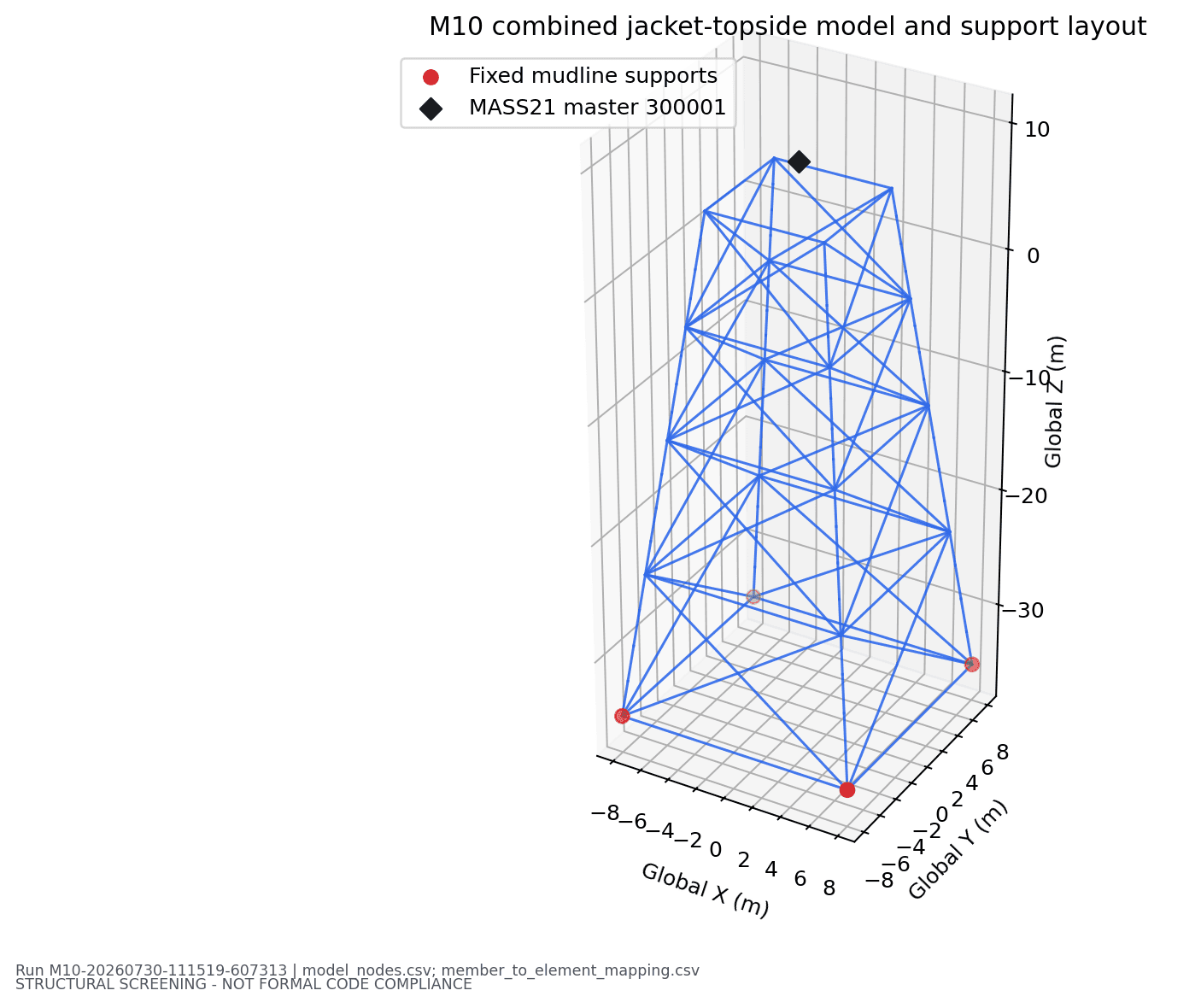
Structural analysis - PyMAPDL / MAPDL
A traceable four-leg fixed-jacket workflow with source-controlled geometry, PyMAPDL/MAPDL model evidence, combined static screening, and a disclosed stability gate.
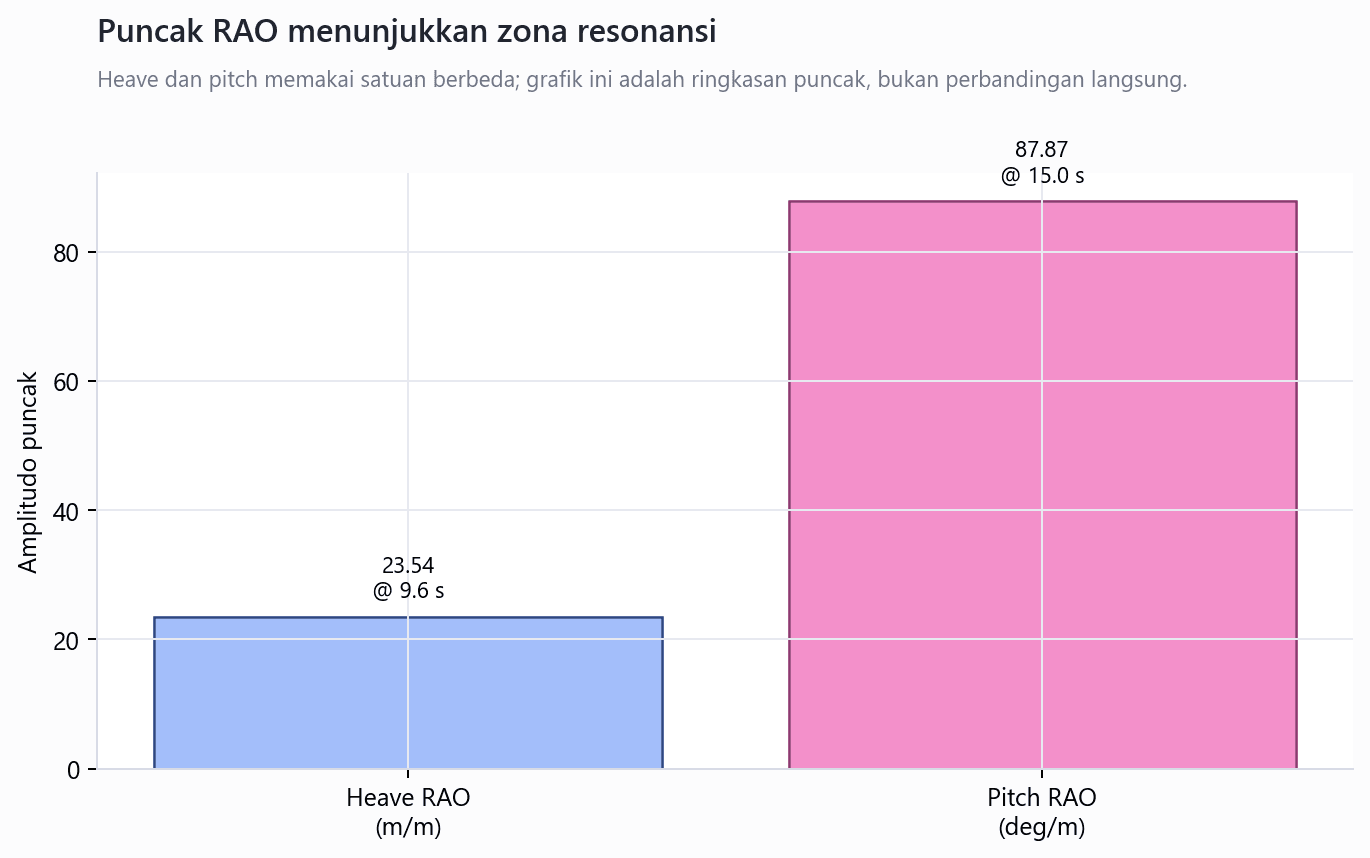
Hydrodynamics · ANSYS AQWA
A traceable AQWA learning simulation covering equilibrium, diffraction/RAO, mooring-warning review, and a fresh irregular-wave response.
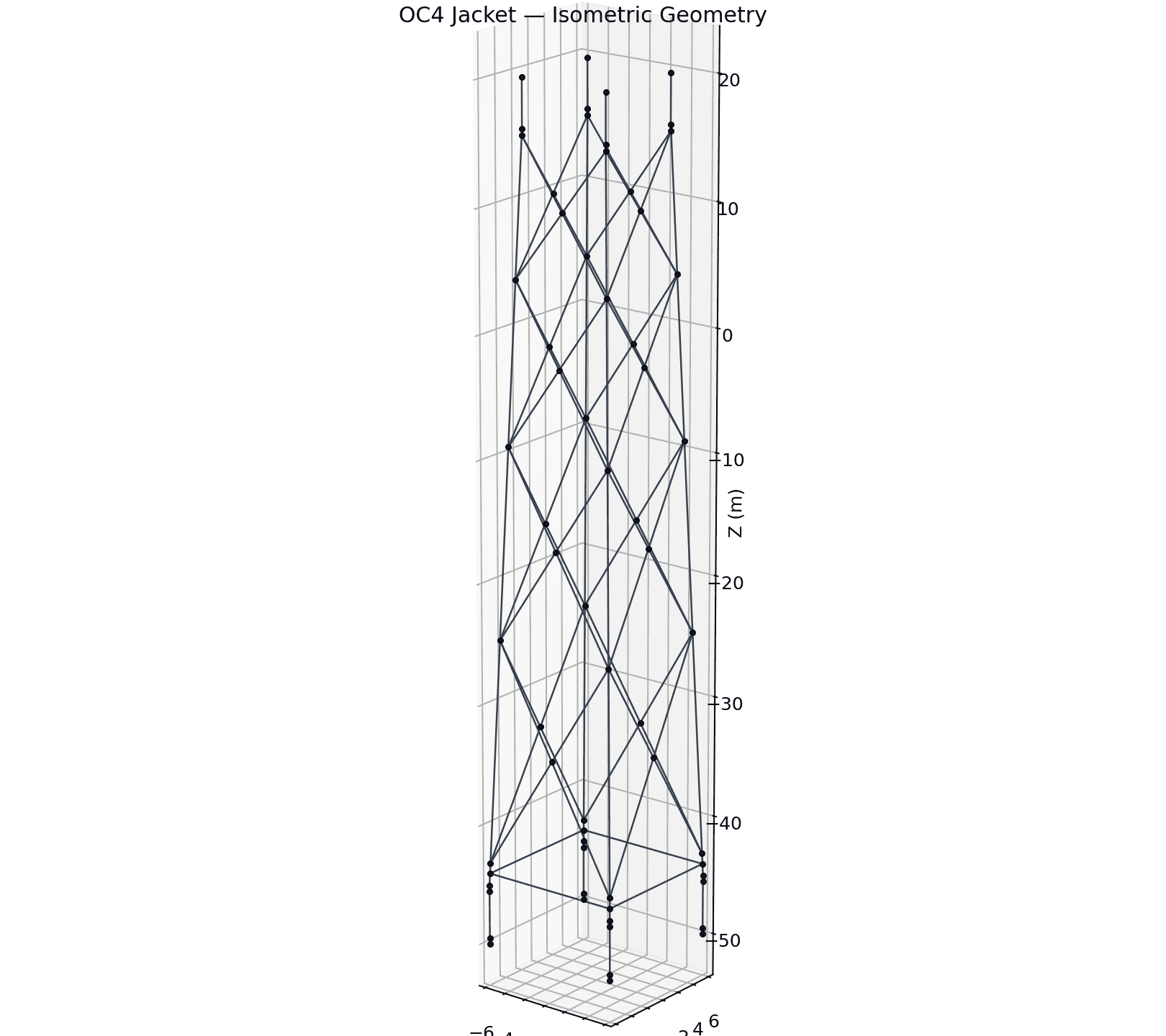
Reference model · OpenFAST / SubDyn
A reference-model reproduction study that maps OC4 OpenFAST/SubDyn structural inputs into a traceable PyMAPDL screening workflow.
Source P&ID drawings are intentionally not published.
Engineering automation · assisted review
A locked, auditable workflow for locating and transcribing P&ID line identifiers while retaining human review and disabling automatic acceptance.
About
I am an Offshore Engineering undergraduate at Institut Teknologi Sepuluh Nopember (ITS), developing my focus in offshore structural engineering, structural analysis, and engineering automation. I learn through documented projects that combine modelling, verification, result review, and technical communication.
More about meEngineering notes
Asset integrity
Introductory noteAn introductory comparison of Risk-Based Inspection and Remaining-Life Assessment, including their objectives, inputs, outputs, relationship, and roles in asset-integrity decisions.
Offshore Structures
Introductory noteOffshore jackets are not shaped only by appearance or convention. Their battered legs, tubular members, bracing patterns, wide foundations, and tapered geometry reflect load paths, environmental exposure, fabrication constraints, installation requirements, and foundation behaviour.
Maritime Technology
Introductory noteArtificial intelligence can help maritime professionals process data, identify patterns, support inspection, monitor assets, and improve operational decisions. Its value depends on data quality, traceability, system boundaries, human oversight, and a clear understanding of what the model cannot decide.
Start a conversation
I am open to internships, engineering collaborations, research discussions, and opportunities to learn from real-world projects.
Let's Connect