Overview
Objective and scope
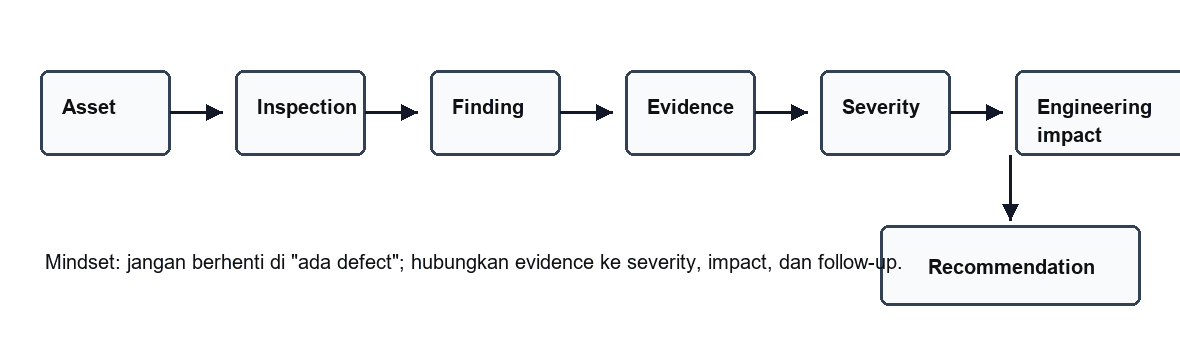
This additional study structures inspection thinking from the asset through evidence and recommended follow-up. It is a documentation and learning framework, not a record of a live client asset or site inspection.
Engineering question
Inspection observations become hard to review when location, evidence, severity, impact, and recommended action are recorded inconsistently.
Objectives
- Map source material into an inspection study pack.
- Keep observations distinct from assessment and recommendation.
- Make evidence and follow-up traceable.
Method
How the work was approached
- Map source documents.
- Define an observation-to-recommendation workflow.
- Use examples as learning material rather than asset findings.
Tools
Technical source mappingExcelTechnical reporting
Assumptions and boundaries
- No client, operator, or real asset record is published in this study pack.
Workflow
From evidence to review
- 01Asset
- 02Inspection
- 03Finding
- 04Evidence
- 05Severity
- 06Engineering impact
- 07Recommendation
Evidence
What the public case is based on
- Dock and Jetty source map, inspection methodology, and example findings in the retained study pack.
Validation
- The study pack documents its sources and keeps findings separate from generic example material.
Results
Selected, bounded observations
Reported results
- The output is an inspection-documentation framework rather than an asset-condition conclusion.
Key takeaways
- Evidence traceability improves the quality of later engineering review.
Interpretation boundary
Inspection evidence and follow-up documentation framework. The specific limitations below remain part of the case, not footnotes.
Limitations
- No field measurements, live inspection record, or repair decision is represented.
What I learned
- A repeatable evidence chain helps preserve the difference between observation and engineering judgment.
Evidence trail
Source mapReviewed
Inspection methodologyReviewed